Contents
- Index
Distance from Microphone to Loudspeaker
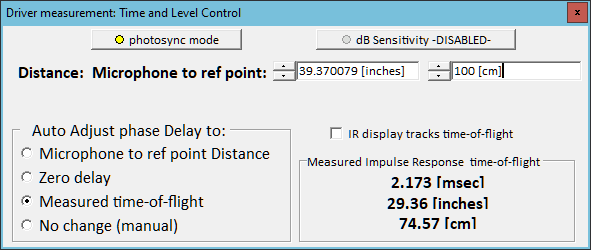
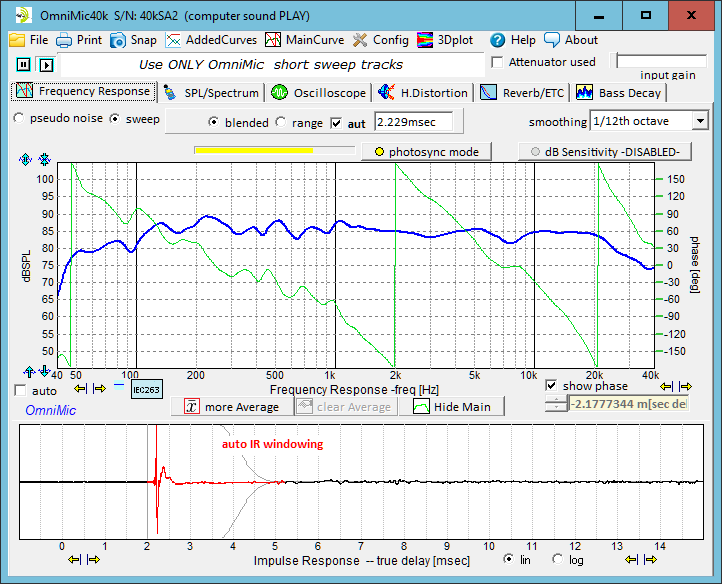
During measurement of frequency response or distortion, the distance of the OmniMic from the loudspeaker or driver will affect both the sound pressure level it detects and with PhotoSync, the phase response. The phase response effect is actually an advantage, because it includes true information about the travel time delay of the sound on its way from the apparent origin of the driver's output and the microphone, which is important for measurements such as when making frequency response data files for crossover network design using simulation tools.
Sound pressure drops off with distance. The ideal value is 6.02dB drop each time the distance doubles though it can be as much as 3dB less than that for some driver types.
When not using PhotoSync, OmniMIc processes phase data based on the largest peak in the impulse response, approximately as if there were no distance between driver and microphone, so the phase curve shape is more gradual and easier to interpret. However, without PhotoSynch it doesn't account for distance from the acoustic source point.
Using PhotoSynch does visually complicate the curve so the delay should be compensated to minimize the phase "wrapping". If you are making files for crossover design, use the "Microphone to ref pt Distance" setting with the correct physically measured microphone to mounting baffle distance. If not, then use "Measured time-of-flight" and the program will compensate delay based on the time it determined for the impulse response peak to arrive (with similar phase result as you would get with PhotoSync turned off).